

Photo composition is all about the art of subjective arrangement … what to do with all that stuff. Composition is about choices.
What is your subject? What do you include and what do you leave out? And how do you arrange all the elements that are included?
Composition in photography uses many of the same guidelines used in painting, film making and similar visual arts.
The Mind Filters What We See
Whenever we see something, our eyes take in everything within our angle of view. The mind processes and evaluates this incoming data, compares it to past experiences, and reaches certain conclusions about what your seeing.
Things we see all the time are generally filed away without our conscious awareness being alerted. When we are out looking for interesting subjects to photograph, this mind filtering can sometimes keep us from seeing everyday scenes in a new way.
This can be a real block to creativity at times, and is why it helps to challenge your mind by exploring a common subject in new ways. Learning about and applying some of the guidelines for composition used for centuries by artists is one way to accomplish this.
The Camera Lens Doesn’t See Like We See
The camera lens sees everything in its field of view, and records it on the image sensor. Your may be so focused on the important subject matter that you don’t see distracting elements in the scene, but the camera still records them.
It’s important to train yourself to see everything that the lens sees and consider how you can compose your shot in a way that reduces any distractions from your main subject.
Some Helpful Hints
Knowing a few simple facts of human behavior can be an important tool in guiding you to understanding good photographic composition.
In fact, you probably already know most of these, but may not realize how they apply to composing pictures. So let’s take a few common examples and you’ll soon see how you can apply these ideas to your own photos.
Make Your Subject Stand Out
On a stage full of people there is a spotlight on one individual. This immediately draws our attention. We assume this person must be important because the spotlight makes them stand out from the crowd. So a good way of emphasizing your subject is by making it stand out in the picture.
Using light, as in the example above, is one way. You may not have use of spot lights, but you can often use the existing light to separate the subject from its surroundings.
Back light that creates a halo effect, or placing the subject against a darker background. Light streaming in from a window spotlighting the subject in a room may do it.
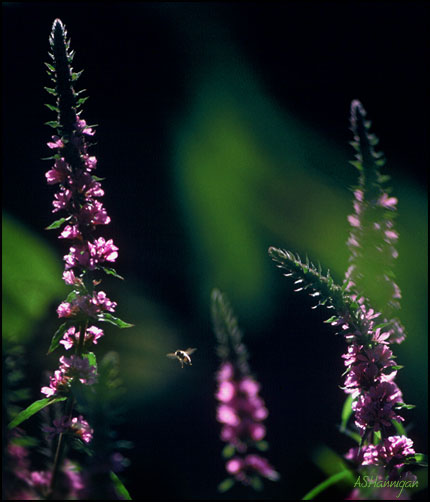
Using selective focus is another good way to make your subject stand out. A sharp, detailed area stands out against an out-of-focus or blurred background. Objects in the foreground can also be out of focus and even help frame the main subject.
This not only makes your subject stand out, but can often add depth to a photograph. Nearby objects can also often hide distracting clutter around the outside edges of your composition.
A person or several people all looking in one direction can draw your eye to see what they are staring at. Natural curiosity. We tend to look in the direction that people or animals in a picture are looking, so using this to draw attention to your subject can be very effective.
Size relationships can sometimes call attention to an individual. A 5 foot tall person standing near several 7 foot basketball players would draw attention. Or the figure on stilts in a parade. A single tiny stone among boulders.
Contrasting size differences can lead to some interesting photos, so look for ways to create a unique picture with this approach.
We tend to be curious about the unusual, so sometimes placing an object in uncommon surroundings can call more attention to it. A fine crystal glass sitting in a junkyard would certainly seem unusual. A lone small child in the middle of a mall full of adults could conjure up all sorts of ideas.
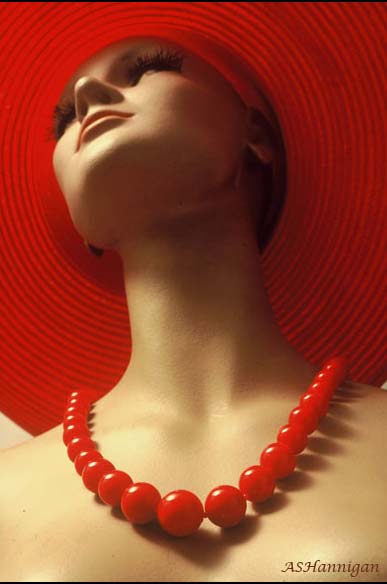
Even everyday items that are all around us can become fascinating when seen from below. These red plastic pop beads, the large brimmed hat, and the bald mannequin in this picture had been laying around the studio forever.
Just putting them together, choosing a low angle and directional side lighting, it became an interesting, almost elegant still life of these otherwise ordinary items.
Shooting down on a subject that is not normally seen from above can also create interesting photos.
Lead The Eye Around
When you read you know to read from left to right, and top to bottom. This training will carry over into viewing images. The eye habitually moves from left to right in the picture. A road that starts on the upper left side of your picture and goes out on the lower right could lead the viewer right out of the frame.
On the other hand, you could use this natural habit to lead the eye to the main subject. Using any sort of lines, especially curving lines to lead the eye about the picture can be very effective. A fence, walkway, wall, shoreline or even lines created by shadows or similar objects lined up next to each other. Look for these ‘arrows’ to help lead the eye around the picture.
Learn The Rules…Then Break Them”
All the elements, or the “rules of composition” should be understood for the effects they produce, rather than followed blindly. Knowing the whys behind these rules enables you to knowingly break them when doing so will create more interesting photos.
To help you develop your understanding of composition, look at photos that you really like, and consider how the artist applied the elements of composition, or perhaps seemingly broke the rules.
And with your own photos, try different arrangements, different cropping, and try ways that might not seem correct. This will help you break down any barriers that might be limiting your creative nature, and it will also develop your intuitive skills of knowing when something just seems to work.
Here’s to better photography …

Al Hannigan
More Guidelines for Photo Composition

0 comments